
CultivaTUM
How Uncertainty Shapes Agriculture

The theme for this year’s TUM: Junge Akademie is “Mind the Gap!”—a mandate to identify and bridge societal divides. For Team CultivaTUM, a critical gap exists at the heart of modern agriculture: the persistent disconnect between scientific recommendations and farmers’ practical implementation.
Through our initial literature review, we have identified six key dimensions of agricultural uncertainty which appear remarkably interconnected.
Dimensions of Uncertainty
Through our initial literature review, we have identified six key dimensions of agricultural uncertainty which appear remarkably interconnected.
In Germany, sophisticated modelling networks project farm incomes over decadal horizons, yet farmer sentiment consistently diverges from these institutional outputs. In the Global South, price-setting bodies similarly fail to align with farmers' own expectations, and informal trading intermediaries whose substantial influence shapes local markets remain absent from formal economic models.
German farmers face policy frameworks that update every five years while farm investments require 10 to 15 years to amortise, creating a structural planning gap. In the Global South, political instability compounds climate shocks, and physical security concerns including widespread livestock theft and farmer-herder conflicts constrain agricultural decision-making in ways that formal risk models rarely capture.
German farmers rely on established rotation principles to maintain soil health, yet shifting climate conditions are making historical experience an unreliable guide for long-term decisions. In the Global South, traditional mixed cropping systems offer proven ecological resilience but face growing pressure from cash crop expansion alongside the parallel emergence of herbicide and insecticide resistance.
Farmers with higher psychological capital, including resilience and self-efficacy, are better positioned to implement changes under uncertainty, yet this resource is distributed unequally across contexts. In the Global South, where institutional safety nets are limited, the psychological burden of adverse events falls more directly on individual farmers, while in Germany, eroding trust in formal systems is transferring a comparable burden onto a population historically accustomed to externalising risk.
Precision farming adoption remains limited across both Germany and the Global South, constrained not only by cost and access but by a deeper issue of trust, as farmers consistently favour peer observation over institutional advice. Regulatory decisions made in high-income contexts, such as the EU's restrictive stance on GMOs, further shape which technologies are available to farmers across the Global South, with significant economic consequences.
German farms are large, mechanised, and integrated into global markets, whereas farms across the Global South are predominantly smallholdings under two hectares, labour-intensive, and embedded in fragmented value chains. A divergent structural trend further complicates the comparison: while European agriculture consolidates into fewer and larger units, farm sizes across much of the Global South are shrinking due to population growth, leaving many smallholders unable to achieve a living income from farming alone.
Our Team


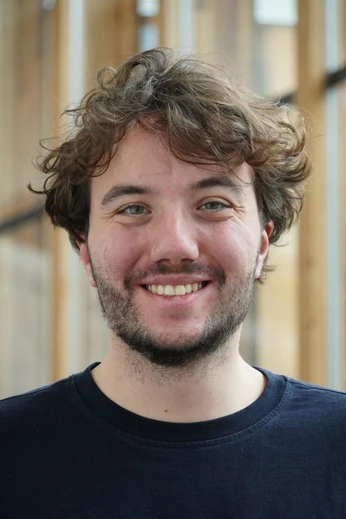







Prof. Dr. Richard Bamler
Bamlers Forschungsinteresse gilt Algorithmen und Schätzverfahren zur optimalen Gewinnung von Geoinformation aus Fernerkundungsdaten.