
CleanStreamTeam
Hello! In the following you will find what our team has been working on for the past 20 months. Enjoy!
Forever Chemicals PFAS
Per- and polyfluoroalkyl substances (PFAS) are a large group of man-made chemicals that have been used for decades in everyday products such as non-stick cookware, water- and stain-resistant textiles, food packaging and firefighting foams. Because of their extremely strong carbon–fluorine bonds, they are highly persistent in the environment and are often referred to as “forever chemicals.”
Due to their widespread use, PFAS have entered surface water, groundwater and drinking water systems around the world. Certain PFAS are associated with potential health risks, which has led to increasing regulatory pressure and the need for effective removal technologies. In industry, a shift from long-chain to short-chain PFAS has taken place. While short-chain compounds tend to accumulate less in organisms, they are often more mobile in water and can be more challenging to remove.

Molecular Structure of PFAS
PFAS molecules typically consist of a fluorinated carbon chain and a chemically active head group. The length of this carbon chain plays an important role in determining how the substance behaves in the environment and how easily it can be treated.
PFAS are commonly classified as long-chain or short-chain compounds based on the number of carbon atoms in their fluorinated chain. This classification influences properties such as mobility, persistence and treatability.
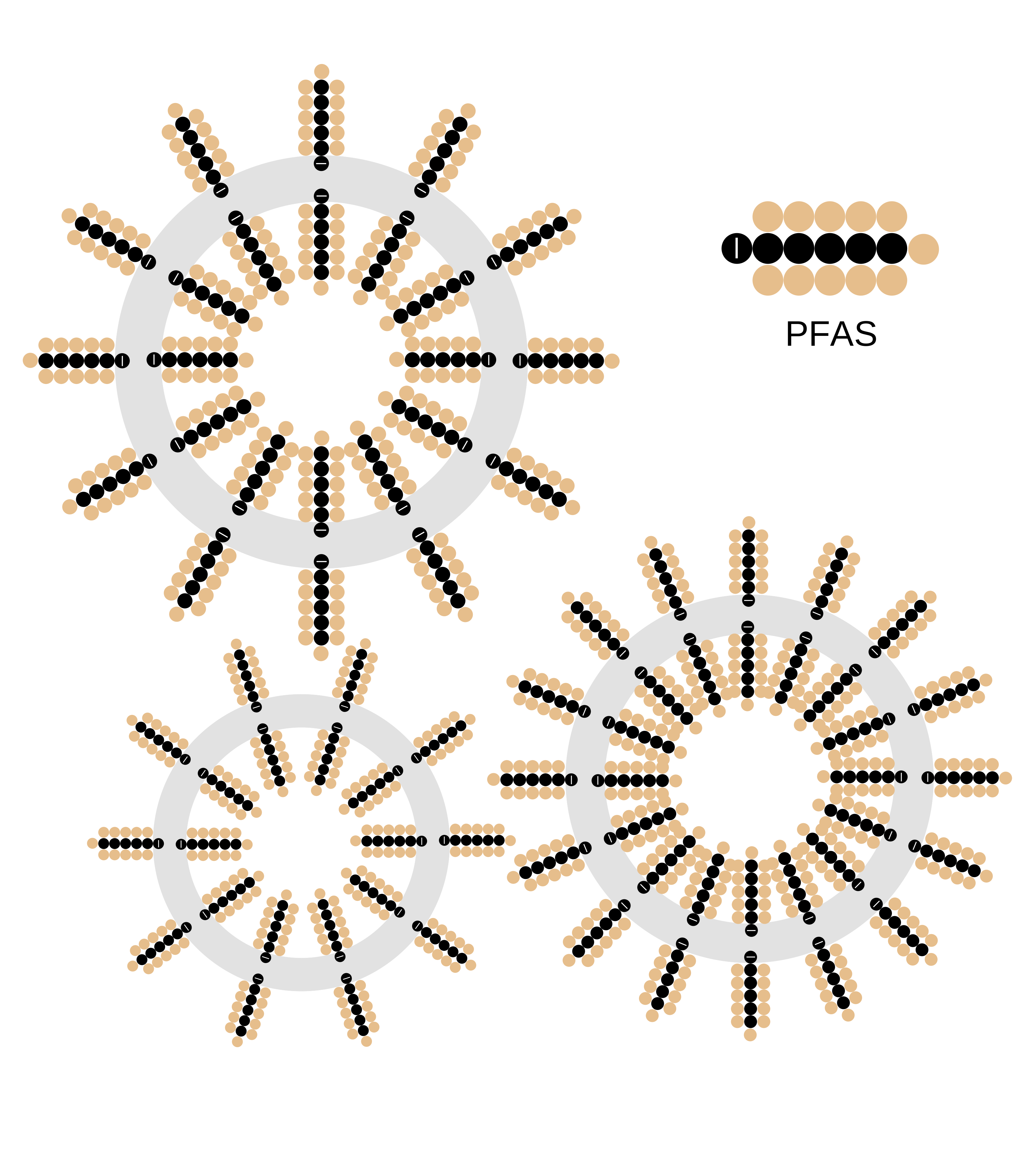
Amphiphilic Properties of PFAS
PFAS have both water-repelling and water-attracting components. This so-called amphiphilic structure causes them to accumulate at interfaces, particularly where air and water meet. This surface activity strongly influences their environmental distribution and also opens up possibilities for targeted removal.
Short-chain PFAS are generally less surface-active than long-chain PFAS and therefore accumulate less efficiently at air–water interfaces.
The addition of surfactants can enhance this interfacial enrichment. Surfactants share similar amphiphilic properties and can promote foam formation and interactions at bubble surfaces, potentially improving the transfer of PFAS from water into a removable foam phase.

Experiment
The aim of this study is to evaluate selected co-surfactants in a simple foam-fractionation setup for PFAS-contaminated water. The goal is to better understand how surfactant-assisted foam fractionation can be optimized for efficient PFAS removal.
Three surfactants were selected for comparison: CTAC, SBDS and ethyl lauroyl arginate (ELA). These substances represent different chemical characteristics and allow us to compare established but potentially problematic surfactants with an alternative that may offer improved environmental compatibility.
A batch foam-fractionation column made of transparent acrylic was constructed for the experiments. Air is introduced at the bottom of the column to generate bubbles, enabling PFAS and added surfactants to accumulate at the air–water interface and form a foam phase that can be separated from the treated water.
Our Results
We are glad to report: our experiement was successfull! CTAC showed the highest removal efficiency, with all monitored PFAS dropping to or near the detection limit after 40 minutes, making it the upper benchmark for surfactant-assisted foam fractionation. In contrast, the baseline without surfactant showed only minor removal, mainly of long-chain PFAS, while short-chain PFAS largely remained in solution. While ELA did not yield removal of PFAS below the level of detection like CTAC, it did still yield considerable improvement over the baseline runs, marking it as an effective cosurfactant while being more ecologically compatible than CTAC.


Without surfactant, PFAS concentrations decreased only slightly over 40 minutes, with removal dominated by long-chain PFAS while short-chain PFAS remained close to their initial levels. ELA was particularly effective for long-chain PFAS, but also short-chain PFAS like PFBS and PFHxA were affected considerably.
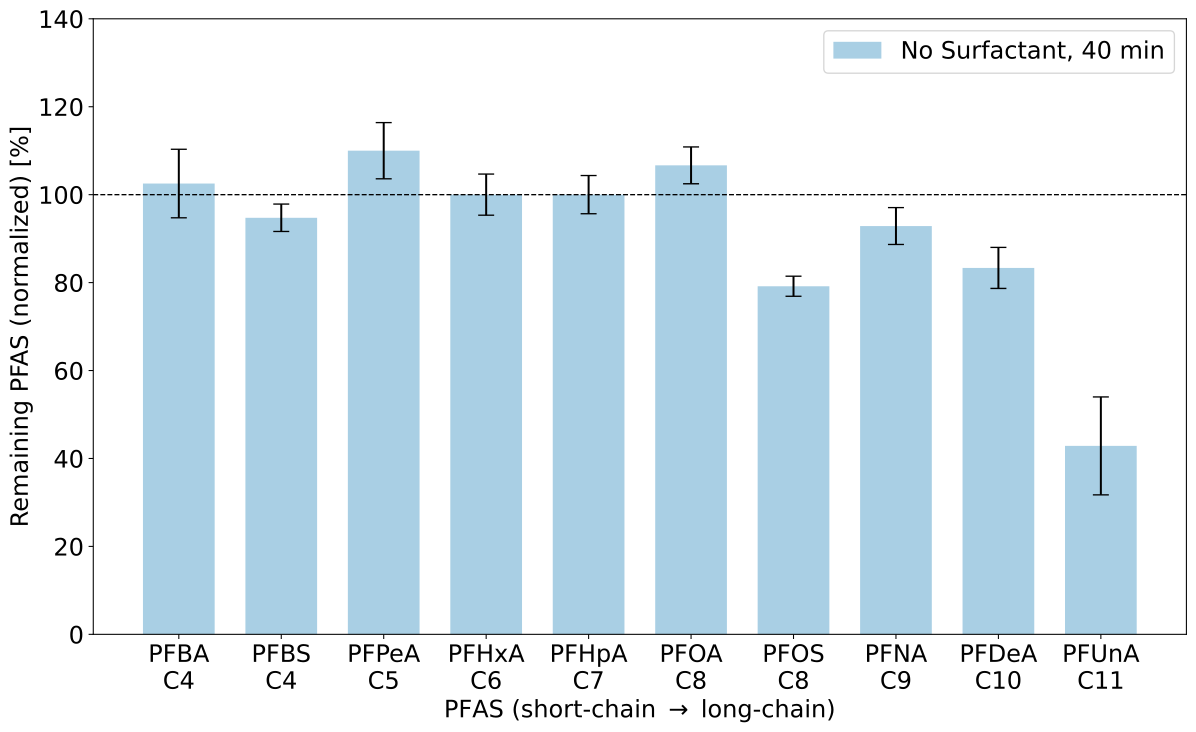
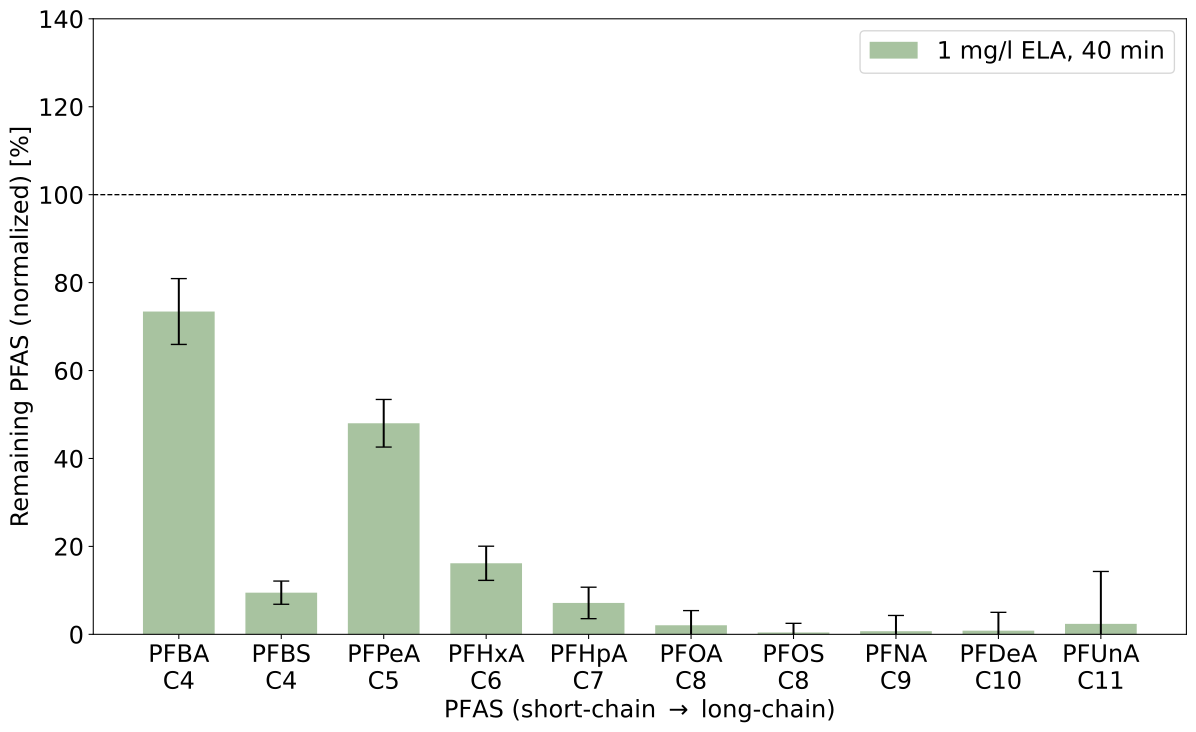
In the baseline (no surfactant) experiment, total PFAS concentration decreased only slightly over the full 40 minutes, indicating generally low removal efficiency. For ELA at 1 mg/l, time-resolved data suggest that most of the achievable removal occurred early, as prolonged bubbling did not significantly further reduce PFAS concentrations. Moreover, increasing ELA concentration from 1 mg/l to 5 mg/l significantly enhanced total PFAS removal, but even at 5 mg/l, longer bubbling times did not substantially improve removal, implying that the highest yield occurred early in the process and that removal slowed or plateaued thereafter.

Overall, the results show that while CTAC achieved the highest removal efficiencies, ELA substantially improved PFAS removal compared to foam fractionation without surfactant, effectively targeting both long- and short-chain PFAS and achieving most of its removal early in the process, thereby demonstrating that ELA is a promising and more ecologically compatible cosurfactant for PFAS removal via foam fractionation.
Timeline
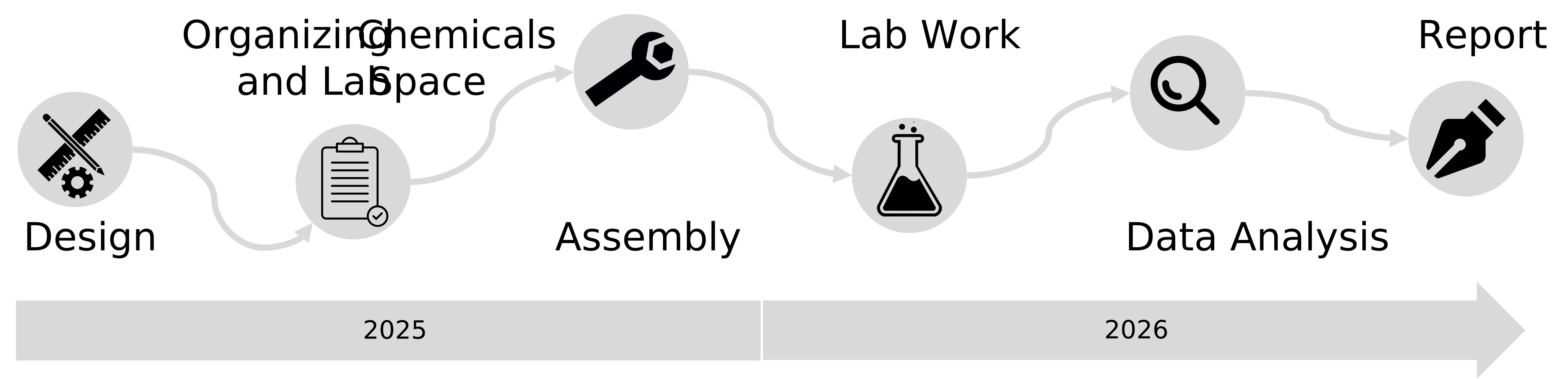
We have completed the experiment and the analysis of our results and are currently in the final stage of writing our report and preparing our data for a hand-over to relevant researchers.
We thank...
- Altan Birler – for supporting us throughout the project in his role as our tutor.
- Peter Finger, TUM JA – for leading the TUM JA program and supporting the framework of this project.
- The sponsors of TUM JA – for their financial and institutional support of the program.
- Dr. Stefano Bruzzano, Fraunhofer UMSICHT – for continuous advice, for providing insight into his work on PFAS filtration, and for supplying the PFAS testing water used in our experiments.
- Dr. Oliver Jacob, Chair of Analytical and Water Chemistry, Technical University of Munich – for continuous advice on all matters of chemistry.
- Niklas Vart, M.Sc. Physics – for supporting the project and contributing valuable technical insight.
- Gabriel Battel, M.Sc. Sustainable Business & Technology – for support of the project and contributions toward its successful execution.
- Prof. Michael Meinhart and Daniel Quosdorf, Postdoc, Chair of Hydromechanics – for their guidance and for providing access to laboratory facilities.
- Cornelia Sonnek – for guidance on team development.
- Prof. Dr. Jörg Drewes, Chair of Urban Water Systems Engineering – for guidance during the initial formulation of our project.
Thomas Kränkel, Dr.-Ing. and David Böhler, M.Sc., Centre for Building Materials at TUM – for granting access to laboratory facilities.
Team
B.Sc. Mathematics
M.Sc. Mathematics
B.A. Architecture

B.Sc. Physics
M.Sc. Physics
B.Sc. Civil Engineering
M.Sc. Environmental Engineering
B.Sc. Physics
M.Sc. Physics

B.Sc. Civil Engineering
M.Sc. Environmental Engineering

B.Sc. Bioinformatics
During the kickoff of Class 2025, we first met during the seminar weekend. What connected us was a shared motivation: we are all interested in building things. Designing, constructing, testing, and understanding systems through hands-on experimentation became the foundation of our collaboration.
Tutor

M.Sc.
Supervisors
- Dr. Oliver Jacob – Chair of Analytical and Water Chemistry, Technical University of Munich
- Dr. Stefano Bruzzano – Fraunhofer UMSICHT
Collaborators
- Prof. Michael Meinhart and Daniel Quosdorf, Postdoc, Chair of Hydromechanics, Technical University of Munich
- Niklas Vart, M.Sc. Physics, Technical University of Munich
- Gabriel Battel, M.Sc. Sustainable Business & Technology, Technical University of Munich
- Prof. Dr. Jörg Drewes, Chair of Urban Water Systems Engineering, Technical University of Munich
- Cornelia Sonnek, Technical University of Munich
- Thomas Kränkel, Dr.-Ing. and David Böhler, M.Sc., Centre for Building Materials, Technical University of Munich